
Surveillance
Surveillance uses location scans, stakeouts, high-zoom cameras, hidden cameras, drones, mobile surveillance, undercover methods, sting operations, bait items, and theft-recovery work to gather evidence of a person's activities.
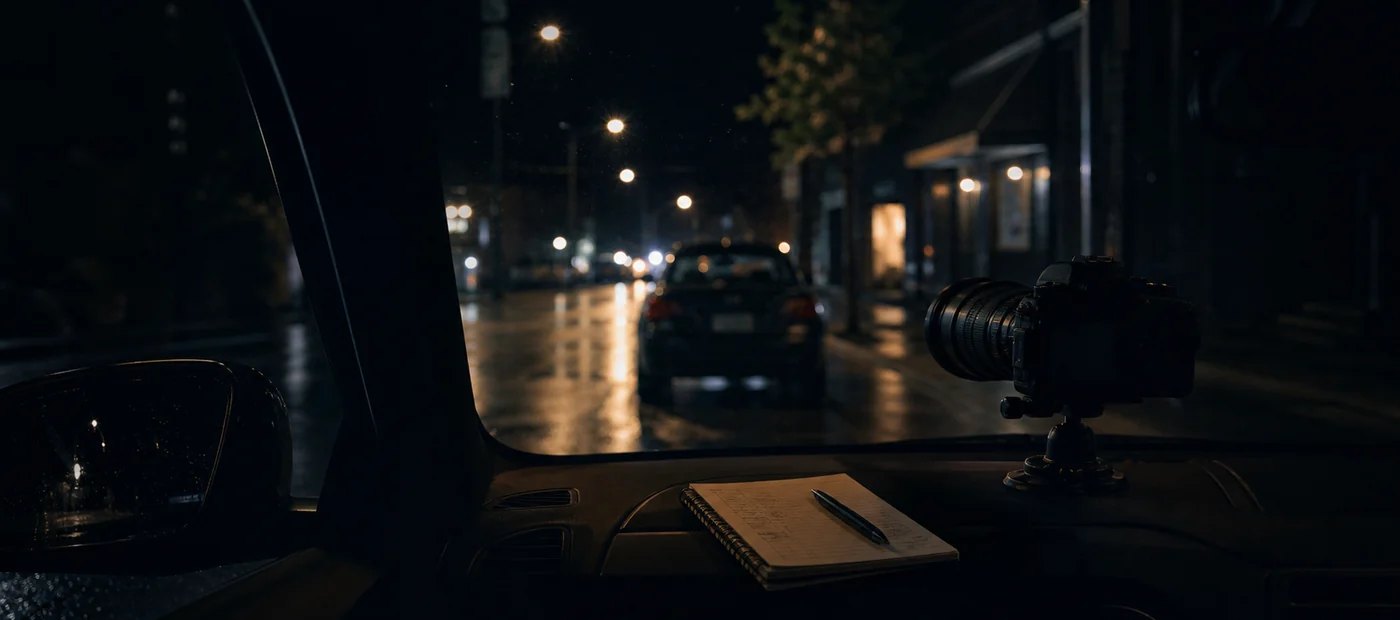
Scan The Location
Upon arrival, we physically scan the location to determine if the person is there, verify who or what else is at the location, map out the area so we can understand the layout, confirm what type of surveillance equipment we need, select the ideal surveillance positions and ways to remain undetected, and identify what types of obstacles we are likely to encounter and how to overcome them.
Stakeouts And Mobile Surveillance
After that, we conduct a stakeout using high-zoom cameras, hidden cameras, and drones to observe their activities, then secretly follow them from location to location on foot, in a vehicle, or with a drone to see where they go and what they do.
Undercover Surveillance
We can also go undercover using disguises, false identities, and believable cover stories so we can get close enough to gather evidence of their activities.
Sting, Bait, And Theft Recovery
Sting Operations provide criminals with opportunities to commit crimes that can be documented. This can involve disguising undercover private investigators as potential victims, luring someone to a location or situation where they are likely to commit a crime or violate a court order, or using bait items such as cars, phones, and packages equipped with GPS trackers and hidden cameras. Once someone attempts to commit a crime, we record their activities and, if necessary, disrupt and detain them until law enforcement arrives. The evidence and location data can then be used to recover stolen property.
Questions People Ask About Surveillance
What does Surveillance document?
Surveillance can document where a person goes, who they meet, what vehicles they use, what they do, and when the activity occurs.
Can Surveillance follow someone between locations?
Yes. Depending on the investigation, we can follow them on foot, in a vehicle, or with a drone.
Can you work undercover?
Yes. We can use disguises, false identities, and believable cover stories when closer access is needed to gather evidence.
Do you conduct sting, bait, and theft-recovery operations?
Yes. We can use undercover investigators, controlled situations, GPS trackers, hidden cameras, and bait items to document a crime, identify the person involved, track stolen property, and support recovery.