
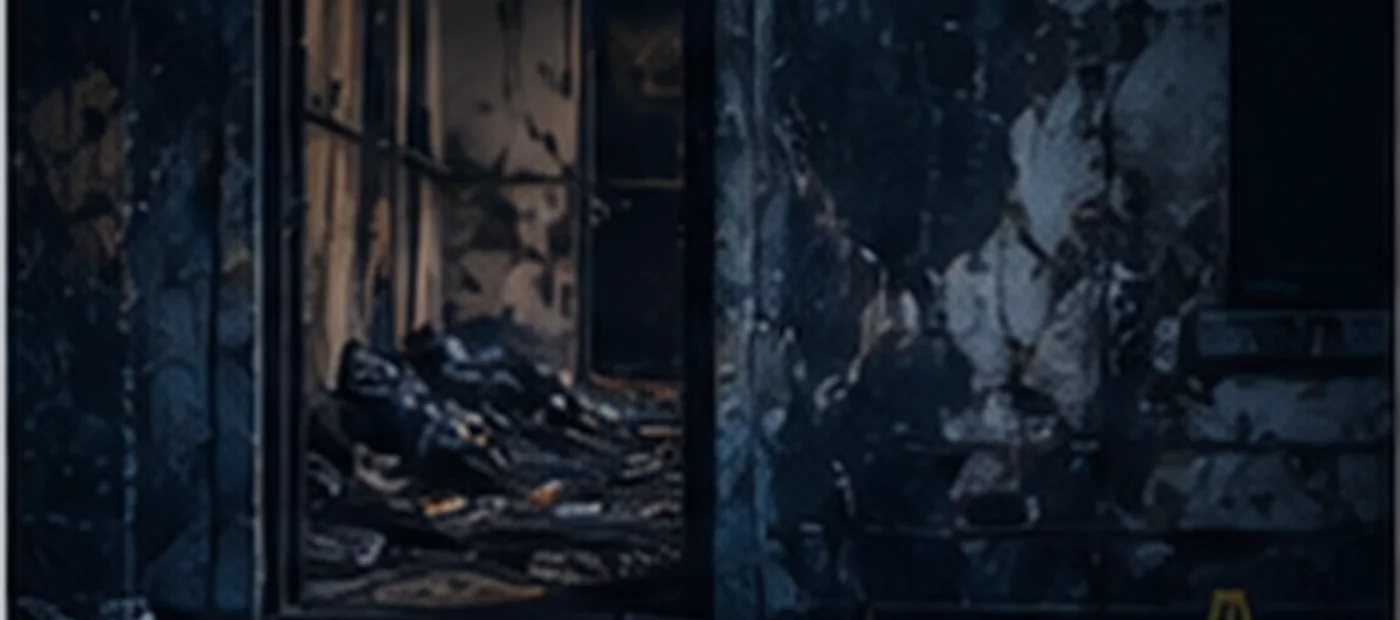
Origin And Cause Come Before Motive
Investigators identify the area and point of origin by examining fire patterns, damage, ventilation, fuel, electrical and mechanical systems, witness observations, and fire dynamics. Only after the evidence supports an intentionally set fire does motive become part of an arson case.
Severe damage does not prove an accelerant was used, and multiple damaged areas do not automatically mean multiple ignition points. Modern synthetic materials, ventilation changes, collapse, suppression water, and flashover can create patterns that require trained interpretation.
Sources: ATF: ArsonATF: Fire Investigation Tools And Services
The Fire Scene Is Fragile After The Flames Are Out
Fire suppression, overhaul, weather, structural instability, utilities, cleanup, and people entering the property can alter evidence. The scene may include electrical components, appliances, containers, ignition devices, debris layers, footprints, fingerprints, DNA, toolmarks, and trace material.
Do not enter an unsafe or restricted structure, move debris, test appliances, collect a suspected container, or begin demolition without authorization. Photograph visible conditions from a safe location and keep a log of every person who enters after control of the property is returned.
Sources: U.S. Fire Administration: The First Responder And Fire InvestigationATF: Fire Investigation Tools And Services
The Timeline Begins Before Anyone Sees Smoke
Investigators compare the last normal condition with alarms, calls, witness observations, camera footage, access events, utility data, and fire-department arrival. Pre-fire activity may show maintenance problems, threats, unusual purchases, unauthorized entry, disabled alarms, moved property, or a person approaching the location.
Post-fire behavior can also matter, but unusual emotion is not proof. Focus on actions that can be documented: inconsistent times, false access claims, removed property, deleted footage, insurance changes, or knowledge of a fact not publicly released.
- Who opened, closed, occupied, or visited the property.
- Alarm, access-control, smart-device, utility, and maintenance records.
- Cameras covering approach routes, alleys, parking, and neighboring property.
- Threats, disputes, prior fires, vandalism, and attempted entry.
- Insurance, ownership, tenancy, and financial changes without assuming motive.
Sources: ATF: Fire Investigation Tools And ServicesU.S. Fire Administration: The First Responder And Fire Investigation
Witnesses Notice Different Parts Of A Fire
One witness may have heard an alarm, another may have smelled fuel, and another may have seen a person or vehicle leave. Interview witnesses separately and record their location, view, time source, weather, lighting, and whether they saw the fire before or after windows failed or responders arrived.
Ask for original phone media and verify the device time. Social-media copies may be compressed or posted later than they were recorded. A short video from before emergency vehicles arrive can establish flame location, smoke conditions, doors, windows, and people near the scene.
Insurance And Criminal Investigations Ask Different Questions
Fire departments and law enforcement investigate public safety and possible crime. Insurers evaluate coverage, cause, loss, inventory, and policy conditions. Private experts may examine origin and cause, electrical systems, products, or structural failure. These processes can share evidence but have different responsibilities.
Keep a written inventory of property, photographs, receipts, serial numbers, repair history, and communications. Do not discard damaged items or authorize destructive testing until the interested parties have had a reasonable opportunity to inspect them.
A Suspected Accelerant Is A Laboratory Question
Odor, rapid growth, or a burn pattern may raise a question about ignitable liquid, but field observation alone is not conclusive. Trained investigators select samples and comparison material, use approved containers, document collection, and submit evidence for laboratory analysis.
Do not place fire debris in ordinary plastic bags or household containers. Improper packaging can allow volatile material to escape or introduce contamination.
Sources: ATF: Fire Investigation Tools And ServicesU.S. Fire Administration: The First Responder And Fire Investigation
Common Fire Myths Can Point The Case In The Wrong Direction
Deep burning, cracked glass, melted metal, and irregular patterns can have several explanations. A person having insurance, being absent, or arguing with someone does not establish arson. Strong conclusions require a fire-science foundation and elimination of credible accidental causes.
The opposite shortcut is equally risky: an electrical appliance near the origin does not prove an accidental electrical fire. Investigators examine whether the component failed first or was damaged by the fire.
Sources: ATF: ArsonATF: Fire Investigation Tools And Services
What Property Owners Should Preserve
Keep the fire report number, investigator and insurer contacts, photographs, video, access records, alarm history, maintenance records, floor plans, occupant list, inventory, prior threat or incident records, and every request to alter the scene. Record temporary repairs and the reason they were necessary.
If a camera system or recorder survived, disconnecting or restarting it may change data. Ask the investigator or a qualified forensic professional how to preserve it. The same applies to smart devices, alarm panels, vehicles, and computers exposed to heat, smoke, or water.
Sources: U.S. Fire Administration: The First Responder And Fire InvestigationATF: Fire Investigation Tools And Services
Electronic Systems Can Preserve A Second Fire Timeline
A modern property may record the fire in systems that never look like traditional evidence. Alarm panels can retain trouble, supervisory, and activation events. Access control can show doors and credentials. Cameras, smart locks, thermostats, network equipment, vehicle telematics, utility meters, and building-management systems may establish when conditions changed and which devices were still communicating.
These records are only useful when their clocks, retention periods, and sources are documented. Do not reset an alarm panel, reconnect damaged equipment, update firmware, or overwrite a recorder simply to see whether it still works. Record the device model, account holder, displayed time, time-zone setting, known clock error, and who exported each file. A system event does not determine the fire cause by itself, but it can confirm or contradict a proposed timeline.
Sources: U.S. Fire Administration: The First Responder And Fire InvestigationATF: Fire Investigation Tools And Services
Questions People Ask About Arson
Does a suspicious fire automatically mean arson?
No. Investigators determine origin and cause before concluding that a fire was intentionally set through criminal conduct.
Can a property owner clean up after the fire department leaves?
Confirm scene release and inspection needs with investigators and the insurer first. Cleanup can destroy or move evidence and create safety hazards.
Does finding fuel at the property prove arson?
No. Many properties lawfully contain ignitable liquids. Investigators examine location, container, residues, use, and the complete origin-and-cause evidence.
Why collect a comparison sample from fire debris?
Unburned or control material helps a laboratory distinguish products naturally present in the material from an ignitable-liquid residue.
What video is most useful?
Original video showing conditions before detection, early fire and smoke, approach and exit routes, and activity after the fire. Preserve the native export and document clock accuracy.